Neuropathy - Nerve-Generated Pain

Nerve-Generated Pain
Conventional Diagnosis and Treatment, Functional Medicine Adjuncts, and the Role of Low-Dose Naltrexone
Yoon Hang Kim, MD, MPH
Board-Certified in Preventive Medicine | Integrative & Functional Medicine Physician
Learning Objectives
After reading this chapter, the clinician should be able to:
- Define neuropathic pain and describe the peripheral and central mechanisms that sustain it.
- Outline the recommended initial evaluation of suspected neuropathic pain and recognize when to refer.
- Apply the guideline-based drug ladder and the condition-specific rules for diabetic neuropathy, post-herpetic neuralgia, trigeminal neuralgia, and CRPS.
- Explain the evidence, and its limits, for alpha-lipoic acid, benfotiamine, acetyl-L-carnitine, palmitoylethanolamide, and Poly-MVA.
- Identify the clients most likely to be considered for low-dose naltrexone (LDN) and state its contraindications, especially opioids.
- Summarize the LDN evidence condition by condition and its certainty.
- Build a stepwise, integrated plan with measurable endpoints and stop rules.
- Counsel clients honestly about what is proven, what is promising, and what is unproven.
Contents
Abbreviations 2
I. Introduction 3
II. Definitions and Mechanisms 3
III. Conventional Diagnosis 3
IV. Conventional Workup 4
V. Conventional Treatment 6
VI. The Functional Medicine Layer 7
VII. Low-Dose Naltrexone in the Plan 11
VIII. An Integrated Stepwise Approach 13
IX. Illustrative Clinical Cases 15
X. Limitations and Future Directions 16
XI. Conclusion 17
Appendix A. Quick-Reference Questions and Answers 17
Appendix B. Glossary 18
References 18
Related Reading 22
About the Author 22
Abbreviations
Abbreviations used in this chapter
I. Introduction
Few problems in clinic are as humbling as nerve pain. The client is often intelligent, motivated, and already tried two or three medications. The exam may show little. The pain is real and relentless anyway. By the International Association for the Study of Pain definition, neuropathic pain arises as a direct consequence of a lesion or disease of the somatosensory system1,2. In clinical trials of drug therapy, no more than about half of clients obtain meaningful relief, and that relief is almost always partial1. The most recent NeuPSIG meta-analysis, covering 313 trials, arrived at much the same place: treatment outcomes are modest and uncertainty remains for several options3.
That gap between what we can offer and what clients need is where integrative and functional medicine often enters the picture. The risk, of course, is that enthusiasm outruns evidence. So this chapter follows one organizing rule: conventional diagnosis and treatment come first and stay in place, functional tools are added thoughtfully and labeled honestly by the strength of their evidence, and low-dose naltrexone is woven in as one option among several, not as a cure.
II. Definitions and Mechanisms
Neuropathic pain is not one disease. Spontaneous burning, stabbing, or electric pain can come from ectopic activity in an injured nerve, a compressed root, a dorsal root ganglion, or even the thalamus. Evoked pain, such as allodynia to light touch or cold, can spread beyond the injured territory, which reflects both peripheral and central sensitization2. At the cellular level the maladaptive changes include altered ion channels, activated immune cells, glial-derived mediators, and epigenetic regulation2.
Two practical points follow. First, today’s guideline drugs act mainly on α2δ calcium channel subunits, sodium channels, and descending inhibitory pathways2. They modulate neuronal excitability but do little about the immune and metabolic drivers. Second, that unaddressed territory is where the functional approaches aim: glycemic and oxidative stress, nutrient sufficiency, and neuroimmune signaling. LDN sits in the last category, because its proposed effect is to quiet glial activation rather than to block a channel4,5. Whether that proposed mechanism explains clinical benefit in people remains unproven.
III. Conventional Diagnosis
III.1 Start with the pattern
The history and bedside exam do most of the work. Distribution (stocking-glove, single nerve territory, dermatomal, facial), quality (burning, shooting, paroxysmal), the presence of allodynia, sensory loss, weakness, and autonomic symptoms all steer the differential. Diabetic neuropathy deserves special care: it is a diagnosis of exclusion, and non-diabetic neuropathies can coexist with diabetes and may be specifically treatable6.
Atypical features should prompt neurology referral rather than more blood tests. These include asymmetry, non-length-dependent spread, motor predominance, acute or subacute onset, and prominent autonomic involvement7.
III.2 Condition-specific diagnosis
Diabetic and other distal symmetric polyneuropathy. The typical presentation is length-dependent numbness, tingling, or pain beginning in the toes. The American Diabetes Association classifies diabetic neuropathies as diffuse (including distal symmetric polyneuropathy and autonomic forms), mononeuropathies, and radiculopathies6.
Post-herpetic neuralgia (PHN). PHN is a clinical diagnosis: persistent pain in the territory of a prior zoster eruption, often burning with marked allodynia8. The most effective intervention is prevention. In a large phase 3 trial, the adjuvanted recombinant zoster vaccine reduced the incidence of herpes zoster by about 97% in adults 50 and older9.
Trigeminal neuralgia (TN). Current classification separates classical TN (neurovascular compression), secondary TN (an identifiable structural or disease cause), and idiopathic TN, with graded diagnostic certainty10. MRI is needed to exclude tumor and multiple sclerosis, and dedicated protocols can show neurovascular contact. Finding contact supports surgical planning but should not be used to confirm the diagnosis11.
Complex regional pain syndrome (CRPS). CRPS is diagnosed clinically with the Budapest criteria, and management centers on restoring function through a multidisciplinary approach12.
IV. Conventional Workup
The evidence favors a short, high-yield laboratory panel. In clients with distal symmetric polyneuropathy and no known cause, recommended testing includes a complete blood count, comprehensive metabolic panel, vitamin B12, serum protein electrophoresis with immunofixation, fasting glucose, and a glucose tolerance test7. The American Academy of Neurology review likewise identified glucose, B12 with metabolites, and serum immunofixation as the highest-yield screening tests (this 2009 practice parameter was reaffirmed in 2025)13. Electrodiagnostic testing and MRI of the neuroaxis add substantial cost, and the evidence supporting routine use is limited7.
Table 1. Initial evaluation of suspected neuropathic pain
A note on extended testing. Functional practices often go further, checking thiamine, B6, folate, vitamin D, and heavy metals. There is nothing wrong with targeted testing when the history points that way, but no guideline supports broad panels for every client, and a borderline result in a client without symptoms of deficiency should not become an automatic prescription. Vitamin B6 is a good example of why: both deficiency and excess can injure peripheral nerves.
V. Conventional Treatment
V.1 Principles
Treat the cause when there is one. Optimize glycemia, remove neurotoxins, correct deficiencies, and decompress what can be decompressed. Intensive glucose control substantially lowers the incidence of distal symmetric polyneuropathy in type 1 diabetes but not clearly in type 27, which is one reason symptomatic treatment matters so much. Set function-based goals up front (sleep, walking, work) and tell clients plainly that partial relief is the realistic target1.
V.2 Pharmacotherapy
The Neuropathic Pain Special Interest Group of the IASP updated its recommendations in 2025. The 313 trials reviewed (284 pharmacological, 29 neuromodulation) supported a strong recommendation for tricyclic antidepressants, α2δ ligands, and serotonin-norepinephrine reuptake inhibitors as first-line treatments. Capsaicin 8% patches, capsaicin cream, and lidocaine 5% plasters received weak second-line recommendations, and botulinum toxin A, repetitive transcranial magnetic stimulation, and opioids received weak third-line recommendations3. An earlier analysis had estimated that publication bias overstated treatment effects by roughly 10%16.
Two cautions matter for this chapter. The 2025 review excluded trials in CRPS, fibromyalgia, and idiopathic orofacial pain3, so its recommendations cannot be assumed to transfer to those conditions. And opioids are not recommended as first- or second-line therapy for painful diabetic neuropathy given the risks of addiction and other harms6. That last point also matters later, because opioids and naltrexone cannot be combined.
Table 2. Pharmacologic ladder for neuropathic pain (NeuPSIG 2025)
V.3 Condition-specific management
Table 3. Condition-specific conventional approach
V.4 Non-drug care
Graded activity, sleep repair, and pain-focused psychological care belong in every plan, even though none of them will make a headline. For CRPS in particular, guidelines place restoration of function at the center of care rather than any single drug12. These are also the pieces most often dropped when medication becomes the whole conversation.
VI. The Functional Medicine Layer
Functional medicine asks why the nerve is injured and what is keeping the pain alive. For nerve pain, five lenses are useful: glycemic and metabolic stress; nutrient sufficiency; drug and toxin exposure; immune-inflammatory activity; and mitochondrial or oxidative stress. The tools below map onto those lenses.
To keep ourselves honest, I sort each tool into one of three tiers. Tier A means the rationale is strong and the action is low-risk, such as correcting a documented deficiency. Tier B means there is randomized-trial evidence with real limitations. Tier C means the support is mechanistic, preclinical, or promotional. “Natural” is not a safety category, and the acetyl-L-carnitine story below proves the point.
VI.1 Start by repleting what is documented to be low
This is the least glamorous and most defensible step. Long-term metformin use is associated with biochemical B12 deficiency (low B12 in 4.3% versus 2.3% of placebo participants at five years in the Diabetes Prevention Program Outcomes Study, and borderline-low values in 19.1% versus 9.5%), and each additional year of use increased the odds of deficiency. Neuropathy was more common among metformin-treated participants with low B12, and the investigators suggested considering routine B12 testing in this group14. If B12, folate, or thiamine is low, correct it. Because B6 can injure nerves at high chronic intakes, do not treat it as a harmless extra.
VI.2 Alpha-lipoic acid
Alpha-lipoic acid (ALA) is an antioxidant cofactor in mitochondrial energy metabolism. The rationale in diabetic neuropathy is that hyperglycemia drives oxidative stress in nerves and ALA may buffer it. The clinical picture is mixed, and route of administration matters.
- Symptoms. In SYDNEY 2, a placebo-controlled trial, oral ALA over five weeks improved symptom scores in clients with symptomatic distal symmetric polyneuropathy20. Pooled analyses of randomized trials show symptom reductions for both intravenous and oral ALA, with larger effects for intravenous dosing over about three weeks21,22.
- Long-term structure and function. In NATHAN 1, 460 clients with mild-to-moderate neuropathy received 600 mg of oral ALA daily or placebo for four years. The primary composite endpoint was not significantly different, largely because the placebo group did not deteriorate, but neuropathic impairment scores were better with ALA and the drug was judged well tolerated23. Serious adverse events were numerically more frequent with ALA (38.1% versus 28.0%) in the reported results.
- Bottom line. A family-medicine evidence review summarized two meta-analyses this way: intravenous ALA for three weeks can improve neuropathy symptoms, oral ALA’s benefit is not clinically significant, and long-term data are lacking22,24,25. That makes ALA a reasonable, low-risk Tier B option for painful diabetic neuropathy, with modest expectations. The studied oral dose was 600 mg daily23.
Practical cautions: ALA can modestly lower glucose, so review the regimen in clients on insulin or insulin secretagogues. Clients on active chemotherapy should clear any antioxidant with their oncologist.
VI.3 B vitamins and benfotiamine
Benfotiamine, a lipid-soluble thiamine derivative, has a metabolic rationale in diabetes. In the BENDIP trial, 165 clients with diabetic polyneuropathy received 300 mg or 600 mg of benfotiamine daily, or placebo, for six weeks. The primary Neuropathy Symptom Score improved significantly in the per-protocol analysis (p = 0.033) but only approached significance in the intention-to-treat analysis (p = 0.055). The Total Symptom Score was not significantly different, although pain showed the best response, and effects were more pronounced at the higher dose26. An earlier three-week pilot study had also examined the drug27. This is a Tier B signal: encouraging and safe-looking, but short, small, and not decisive.
Methylcobalamin and combination B formulas are popular in this space. I would frame them as treatment of deficiency first, and as an empiric trial second, with no claim that they work like an analgesic. Avoid stacking high-dose B6.
VI.4 Acetyl-L-carnitine: the cautionary tale
In two 52-week randomized trials in established diabetic neuropathy, analyzed together in 1,257 clients, acetyl-L-carnitine (500 mg or 1,000 mg three times daily) improved nerve fiber regeneration and vibration perception, and improved pain in one study and in the combined cohort at the higher dose; nerve conduction did not improve. Several authors were affiliated with the manufacturer28. Yet in SWOG S0715, 409 women receiving taxane chemotherapy were randomized to 3,000 mg daily or placebo. There was no benefit at 12 weeks and more chemotherapy-induced neuropathy by 24 weeks29, and two-year follow-up suggested worse symptoms in the carnitine group30. The trial investigators concluded that clients should be discouraged from using supplements without proven efficacy29. The lesson is broader than carnitine: a supplement can help in one neuropathy and harm in another, and the context decides.
VI.5 Palmitoylethanolamide (PEA)
PEA is an endogenous fatty-acid amide that may down-modulate mast-cell and glial activity. A pooled analysis of 12 studies reported progressive pain reduction in chronic and neuropathic pain31, and a separate meta-analysis of ten studies found greater pain reduction with PEA than with control. That analysis also stressed the small number of trials, variable designs, and poor quality of side-effect reporting, and called for better placebo-controlled trials32. PEA is a reasonable Tier B–C option for clients who want a well-tolerated adjunct, with the honest caveat that the trials are small and heterogeneous.
VI.6 Poly-MVA
Poly-MVA (also sold as Polydox) is a proprietary liquid containing a lipoic acid–palladium complex with acetylcysteine, B vitamins, and trace minerals. You will hear it discussed for fatigue, cancer support, and neurological conditions. The evidence base is thin. Memorial Sloan Kettering’s clinician monograph states that the product has not been evaluated in clinical trials; the animal work suggests neuroprotective, antioxidant, and other properties, and many of the promoters’ claims are not supported by scientific evidence33. There are small registered studies, for example an open-label study in ALS fatigue and a dose-evaluation safety study in astrocytoma34,35, but I am not aware of any randomized trial in neuropathy.
So Poly-MVA is Tier C for nerve pain. If a client wants to use it, the honest conversation covers the absence of neuropathy trials, the considerable cost, the importance of not substituting it for proven treatment, and coordination with the oncology team for anyone receiving chemotherapy or radiation. Its ALA and B-vitamin content also overlaps with the better-studied single agents above, which is a more defensible place to start.
VI.7 Other agents and lifestyle
Magnesium, vitamin D, curcumin, omega-3 fatty acids, and botanicals are frequently discussed, but I have not reviewed neuropathy-specific trial evidence for them here and would not present them as established. The lifestyle tier deserves more credit than it gets: glycemic control, alcohol reduction, regular activity, sleep, and stress physiology all affect how the nervous system handles pain signals.
Table 4. Functional and nutritional tools: evidence summary
VI.8 How to use these tools without fooling yourself
- Replete and treat causes first, then add one new agent at a time so benefit and side effects can be attributed.
- Define the target before starting (average and worst pain, sleep, function, allodynia area) and judge at 8 to 12 weeks.
- Stop what does not help. Supplement lists grow silently and become their own burden.
- Tell clients which tier each item is in. Uncertainty explained up front builds more trust than enthusiasm.
VII. Low-Dose Naltrexone in the Plan
VII.1 Rationale
Naltrexone at standard doses blocks opioid receptors. At low doses the leading hypotheses are two. The first is nonclassical antagonism of Toll-like receptor 4 on microglia, which in animal neuropathy models suppressed glial activation and reversed established mechanical allodynia through a mechanism partly independent of opioid receptors4,5. The second is a transient opioid-receptor blockade that may prompt compensatory increases in endogenous opioid signaling37. This fits the phenotype of allodynia, hyperalgesia, and pain out of proportion to tissue injury. It is worth repeating that the TLR4 evidence is strongest in cells and animals, and it is not yet demonstrated that ordinary oral LDN achieves clinically meaningful human TLR4 antagonism.
VII.2 What the clinical evidence shows
Condition by condition, the certainty varies widely.
Table 5. LDN evidence by condition
Reviews reach a similar judgment. Systematic and scoping reviews describe LDN as promising in centralized pain conditions but limited by small, mostly uncontrolled studies52,53, and a recent narrative review emphasizes that favorable uncontrolled findings have often not been replicated in larger placebo-controlled trials54. That is exactly the pattern to keep in mind when counseling clients.
VII.3 Who is worth a trial?
No validated predictor exists. The following features are hypotheses, not rules, but they describe the clients in whom an LDN trial seems most reasonable:
- Allodynia or hyperalgesia out of proportion to ongoing tissue injury
- Pain spreading beyond one injured structure
- Overlap with CRPS, fibromyalgia, small-fiber symptoms, or dysautonomia
- Poor tolerance of sedating neuropathic pain drugs
- No requirement for opioid analgesia
VII.4 Dosing and titration as published
Published pain studies most often use 1 to 5 mg daily, with about 4 to 4.5 mg common. The diabetic neuropathy trial started at 2 mg and went to 4 mg when needed38; the CRPS case reports used 4.5 mg43; the pediatric case started at 1 mg and reached 4 mg44; and the ongoing Hospital for Special Surgery CRPS trial titrates 1.5 mg, then 3 mg, then 4.5 mg over three months47. There is no validated condition-specific best dose, no serum target, and greater dosing flexibility in observational series should not be mistaken for stronger evidence. Individualized titration is the norm in clinical practice55,56. Since LDN is typically compounded and used off-label for these conditions, say so in the consent discussion.
VII.5 Safety and the opioid problem
LDN is generally well tolerated in the small studies, with vivid dreams, insomnia, headache, gastrointestinal upset, and fatigue the commonly described effects. The real hazard is opioid antagonism. Naltrexone is contraindicated in clients receiving opioid analgesics, methadone, or buprenorphine and can precipitate withdrawal; the labeling calls for an opioid-free interval of at least 7 to 10 days after short-acting opioids, and longer after long-acting agents57,58. Clients must understand that naltrexone can blunt opioid-containing cough and antidiarrheal preparations and complicate emergency or perioperative analgesia. Attempts to overcome the blockade with high opioid doses can be dangerous. Acute hepatitis or liver failure is a labeled contraindication in some naltrexone labeling, and low-dose exposure does not remove the need for individual liver-risk assessment57.
VII.6 Where LDN fits relative to everything above
Think of LDN as a late-stage or parallel adjunct, not as step one. For classical trigeminal neuralgia, that means MRI and a trial of carbamazepine or oxcarbazepine first11. For PHN, it means established drugs first, and LDN only as a documented off-label trial after those have failed or been poorly tolerated. For CRPS, it means function-focused rehabilitation and specialist care first12. For painful diabetic neuropathy, where the single randomized trial exists, LDN is a defensible option particularly in clients who cannot tolerate tricyclics38.
One more honest point: there are no trials combining LDN with ALA, benfotiamine, PEA, or any other agent in this chapter. Any combination is clinical judgment, and sequencing new agents one at a time is the only way to know what is helping.
VIII. An Integrated Stepwise Approach
Figure 1 shows how the layers stack. Each one rests on the one beneath it, and the steps below walk through them in order.
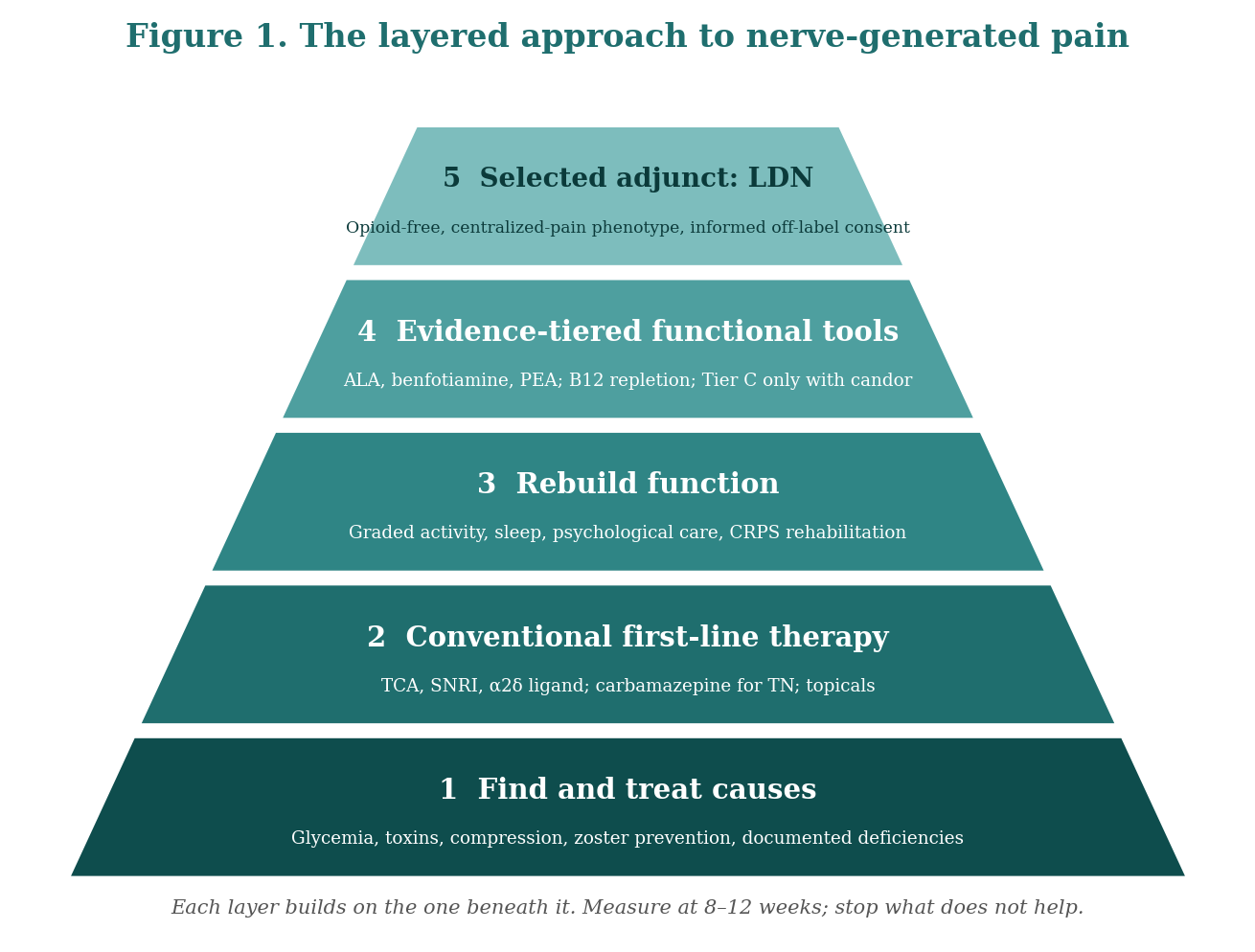
- Define the pain and find causes. Pattern, exam, red flags, and the short lab panel. Refer for atypical features or TN imaging.7,11
- Treat what is treatable. Glycemia, drug and alcohol exposures, compression, zoster prevention, and documented deficiencies.6,9,14
- Start conventional first-line therapy. Tricyclic, SNRI, or α2δ ligand as appropriate, or condition-specific therapy (carbamazepine for TN). Add topicals for localized pain.3,11
- Rebuild function. Graded activity, sleep, psychological support, and in CRPS a multidisciplinary rehabilitation plan.12
- Add evidence-tiered functional tools. One at a time: ALA or benfotiamine in diabetic neuropathy, PEA where a well-tolerated adjunct is wanted, and nothing from Tier C without a frank discussion of the evidence.
- Consider LDN in selected clients. Opioid-free, centralized-pain phenotype, conventional options exhausted or poorly tolerated, informed off-label consent.38,57
- Measure and decide. Average and worst pain, evoked-pain area or threshold, attack frequency for facial pain, sleep, function, and a global rating of change at 8 to 12 weeks. Stop after an adequate tolerated trial without meaningful benefit.
IX. Illustrative Clinical Cases
The three cases below are composites constructed for teaching. They do not describe individual clients, and no outcomes are reported; each ends with how the plan would be reassessed.
Case 1. Burning feet on long-term metformin
Presentation. A 58-year-old man with type 2 diabetes for 12 years, on metformin throughout, reports several months of burning in both feet that is worse at night and has disrupted his sleep.
Workup. Examination shows reduced distal vibration sense and ankle reflexes, with no weakness or asymmetry. HbA1c is above goal. Vitamin B12 is borderline low with an elevated methylmalonic acid, and serum protein electrophoresis is normal.
Synthesis. This is length-dependent diabetic polyneuropathy with probable superimposed B12 deficiency. Diabetic neuropathy is a diagnosis of exclusion, so the B12 result matters6,13,14.
Plan. Replete B12, tighten glycemic control, and start a first-line drug chosen for his comorbidities. If pain remains at 8 to 12 weeks, consider a trial of alpha-lipoic acid, with modest expectations23. If a tricyclic is not tolerated, LDN is a defensible option based on the one randomized trial, provided he takes no opioids38.
Reassessment. Average and worst pain, sleep, and walking tolerance at 8 to 12 weeks, changing one thing at a time.
Case 2. Spreading pain after a wrist fracture
Presentation. A 34-year-old woman, 14 months after a wrist fracture, has burning pain, allodynia, swelling, temperature and color asymmetry, and stiffness that has spread up the forearm. She takes no opioids.
Synthesis. She meets Budapest criteria for CRPS, which are applied clinically, and current guidance puts restoration of function at the center of care12.
Plan. Function-focused rehabilitation with physical and occupational therapy and psychological support comes first, with specialist input on medications. Because standard adjuncts have been inadequate, LDN can be offered as an off-label adjunct with an honest consent discussion: published evidence is three case reports and retrospective subgroup data, and placebo-controlled trials are not yet reported41,43,47.
Reassessment. Area of allodynia, range of motion, grip or hand function, and sleep at baseline and at 8 to 12 weeks. Stop if there is no meaningful benefit after an adequate, tolerated trial.
Case 3. Persistent pain after shingles
Presentation. A 71-year-old woman has had burning, allodynic pain in a thoracic dermatomal band for eight months after herpes zoster. There are no red flags.
Plan. Established options come first: a gabapentinoid with renal dosing, topical lidocaine, and capsaicin if needed8,17. Correct any documented deficiency. When she asks about LDN, the honest answer is that no persuasive human study exists for PHN, and an FDA orphan designation is not evidence of efficacy51. A documented off-label trial is reasonable only after established options have failed or been poorly tolerated, and she must be opioid-free. Family members who are eligible should hear about zoster vaccination9.
Teaching point. This case illustrates the evidence gap: a biologically plausible use with essentially no direct clinical support.
X. Limitations and Future Directions
Most of the LDN literature is retrospective or uncontrolled, involves small samples, and often includes concurrent treatments, so benefit cannot be attributed to LDN alone. The best controlled LDN study used an active comparator without a placebo arm38. The functional tools carry their own limitations: short trials, industry-linked authors in some carnitine analyses28, and cases such as acetyl-L-carnitine where reassuring early data were contradicted in another population29. The field needs larger placebo-controlled trials over clinically relevant timeframes, which is also the conclusion of the most recent guideline update3. Trials that test combinations, define responder phenotypes, and compare sequencing strategies would be especially valuable.
Research priorities follow directly from these gaps:
- Placebo-controlled LDN trials in painful diabetic neuropathy, CRPS, trigeminal neuropathic pain, and PHN, with pre-specified outcomes and adequate duration.
- Head-to-head comparisons of LDN with established first-line drugs, and trials of LDN as an add-on.
- Longer trials of oral alpha-lipoic acid, and randomized trials of palmitoylethanolamide with careful adverse-event reporting.
- Studies that define responder phenotypes and biomarkers, and trials that compare sequencing strategies for nutritional and pharmacologic agents.
Access and equity. LDN is typically compounded and used off-label, so availability, cost, and insurance coverage vary widely, and many of the functional agents are paid for out of pocket. Clinicians should raise cost early in the conversation.
XI. Conclusion
Nerve pain asks us to hold two things at once. The first is discipline: a short, evidence-based workup, guideline-based first-line drugs, condition-specific rules, and function-focused rehabilitation. The second is openness: a stepwise, honestly labeled use of nutritional and functional tools and, in selected clients, a carefully monitored trial of low-dose naltrexone. The clients who do best, in my experience, are the ones whose clinicians can say clearly what is proven, what is promising, and what is still only hope.
Important: This chapter is for educational purposes only and is not medical advice. Doses are reported as studied in the cited literature and are not recommendations for individual patients. LDN and the supplements discussed are used off-label or outside of approved indications for these conditions. Treatment decisions should be made with the patient’s own clinicians.
Appendix A. Quick-Reference Questions and Answers
What is the minimum laboratory evaluation before calling neuropathy idiopathic?
Glucose status (fasting glucose or HbA1c, with a glucose tolerance test if glucose is normal), vitamin B12 with methylmalonic acid, serum protein electrophoresis with immunofixation, a CBC, and a comprehensive metabolic panel. Atypical features such as asymmetry, motor predominance, or rapid onset should prompt neurology referral rather than more tests.7,13
A client takes an opioid and wants to start LDN. What now?
Do not combine them. Naltrexone is contraindicated with opioid analgesics, methadone, and buprenorphine and can precipitate withdrawal. The labeling calls for an opioid-free interval of at least 7 to 10 days after short-acting opioids and longer after long-acting agents. Coordinate any opioid change with the prescribing clinician.57,58
Is alpha-lipoic acid better given orally or intravenously?
The clearer symptom benefit in diabetic neuropathy is with intravenous dosing over about three weeks. Oral benefit is smaller and of uncertain clinical significance, and long-term data are limited, although a four-year oral trial showed better neuropathic impairment scores.23,24
A client on taxane chemotherapy asks about supplements for neuropathy. What do I say?
Avoid acetyl-L-carnitine: in a large randomized trial it did not help and was associated with more neuropathy at 24 weeks, and worse symptoms were noted at two years. Coordinate any other supplement, including antioxidants, with the oncology team.29,30
Appendix B. Glossary
Glossary
References
Numbered in order of first citation.
1. Dworkin RH, O’Connor AB, Audette J, et al. Recommendations for the pharmacological management of neuropathic pain: an overview and literature update. Mayo Clinic Proceedings. 2010;85(3 Suppl):S3-S14. doi:10.4065/mcp.2009.0649. PMID: 20194146. [link]
2. Finnerup NB, Kuner R, Jensen TS. Neuropathic pain: from mechanisms to treatment. Physiological Reviews. 2021;101(1):259-301. doi:10.1152/physrev.00045.2019. PMID: 32584191. [link]
3. Soliman N, Moisset X, Ferraro MC, et al. Pharmacotherapy and non-invasive neuromodulation for neuropathic pain: a systematic review and meta-analysis. Lancet Neurology. 2025;24(5):413-428. doi:10.1016/S1474-4422(25)00068-7. PMID: 40252663. [link]
4. Hutchinson MR, Zhang Y, Brown K, et al. Non-stereoselective reversal of neuropathic pain by naloxone and naltrexone: involvement of Toll-like receptor 4. European Journal of Neuroscience. 2008;28(1):20-29. doi:10.1111/j.1460-9568.2008.06321.x.
5. Younger J, Parkitny L, McLain D. The use of low-dose naltrexone as a novel anti-inflammatory treatment for chronic pain. Clinical Rheumatology. 2014;33(4):451-459. doi:10.1007/s10067-014-2517-2.
6. Pop-Busui R, Boulton AJM, Feldman EL, et al. Diabetic neuropathy: a position statement by the American Diabetes Association. Diabetes Care. 2017;40(1):136-154. doi:10.2337/dc16-2042. PMID: 27999003. [link]
7. Callaghan BC, Price RS, Feldman EL. Distal symmetric polyneuropathy: a review. JAMA. 2015;314(20):2172-2181. doi:10.1001/jama.2015.13611. PMID: 26599185. [link]
8. Johnson RW, Rice ASC. Postherpetic neuralgia. New England Journal of Medicine. 2014;371:1526-1533.
9. Lal H, Cunningham AL, Godeaux O, et al. Efficacy of an adjuvanted herpes zoster subunit vaccine in older adults. New England Journal of Medicine. 2015;372(22):2087-2096. doi:10.1056/NEJMoa1501184. PMID: 25916341. [link]
10. Cruccu G, Finnerup NB, Jensen TS, et al. Trigeminal neuralgia: new classification and diagnostic grading for practice and research. Neurology. 2016;87(2):220-228.
11. Bendtsen L, Zakrzewska JM, Abbott J, et al. European Academy of Neurology guideline on trigeminal neuralgia. European Journal of Neurology. 2019;26(6):831-849. doi:10.1111/ene.13950. PMID: 30860637. [link]
12. Harden RN, McCabe CS, Goebel A, et al. Complex regional pain syndrome: practical diagnostic and treatment guidelines, 5th edition. Pain Medicine. 2022;23(Suppl 1):S1-S53. doi:10.1093/pm/pnac046. [link]
13. England JD, Gronseth GS, Franklin G, et al. Practice parameter: evaluation of distal symmetric polyneuropathy: role of laboratory and genetic testing (an evidence-based review). Neurology. 2009;72(2):185-192. [link]
14. Aroda VR, Edelstein SL, Goldberg RB, et al. Long-term metformin use and vitamin B12 deficiency in the Diabetes Prevention Program Outcomes Study. Journal of Clinical Endocrinology & Metabolism. 2016;101(4):1754-1761. doi:10.1210/jc.2015-3754. PMID: 26900641. [link]
15. England JD, Gronseth GS, Franklin G, et al. Practice parameter: evaluation of distal symmetric polyneuropathy: role of autonomic testing, nerve biopsy, and skin biopsy (an evidence-based review). Neurology. 2009;72(2):177-184.
16. Finnerup NB, Attal N, Haroutounian S, et al. Pharmacotherapy for neuropathic pain in adults: a systematic review and meta-analysis. Lancet Neurology. 2015;14(2):162-173. doi:10.1016/S1474-4422(14)70251-0. PMID: 25575710. [link]
17. Nalamachu S, Morley-Forster P. Diagnosing and managing postherpetic neuralgia. Drugs & Aging. 2012;29(11):863-869.
18. Gronseth G, Cruccu G, Alksne J, et al. Practice parameter: the diagnostic evaluation and treatment of trigeminal neuralgia (an evidence-based review). Neurology. 2008;71(15):1183-1190.
19. Lambru G, Zakrzewska J, Matharu M. Trigeminal neuralgia: a practical guide. Practical Neurology. 2021;21(5):392-402. doi:10.1136/practneurol-2020-002782. [link]
20. Ziegler D, Ametov A, Barinov A, et al. Oral treatment with α-lipoic acid improves symptomatic diabetic polyneuropathy: the SYDNEY 2 trial. Diabetes Care. 2006;29(11):2365-2370.
21. Ziegler D, Nowak H, Kempler P, Vargha P, Low PA. Treatment of symptomatic diabetic polyneuropathy with the antioxidant α-lipoic acid: a meta-analysis. Diabetic Medicine. 2004;21(2):114-121.
22. Mijnhout GS, Kollen BJ, Alkhalaf A, Kleefstra N, Bilo HJG. Alpha lipoic acid for symptomatic peripheral neuropathy in patients with diabetes: a meta-analysis of randomized controlled trials. International Journal of Endocrinology. 2012;2012:456279. doi:10.1155/2012/456279. PMID: 22331979. [link]
23. Ziegler D, Low PA, Litchy WJ, et al. Efficacy and safety of antioxidant treatment with α-lipoic acid over 4 years in diabetic polyneuropathy: the NATHAN 1 trial. Diabetes Care. 2011;34(9):2054-2060. doi:10.2337/dc11-0503. PMID: 21775755. [link]
24. Bartkoski S, Day M. Alpha-lipoic acid for treatment of diabetic peripheral neuropathy. American Family Physician. 2016;93(9):786. [link]
25. Han T, Bai J, Liu W, Hu Y. A systematic review and meta-analysis of α-lipoic acid in the treatment of diabetic peripheral neuropathy. European Journal of Endocrinology. 2012;167(4):465-471.
26. Stracke H, Gaus W, Achenbach U, Federlin K, Bretzel RG. Benfotiamine in diabetic polyneuropathy (BENDIP): results of a randomised, double blind, placebo-controlled clinical study. Experimental and Clinical Endocrinology & Diabetes. 2008;116(10):600-605. doi:10.1055/s-2008-1065351. PMID: 18473286. [link]
27. Haupt E, Ledermann H, Köpcke W. Benfotiamine in the treatment of diabetic polyneuropathy: a three-week randomized, controlled pilot study (BEDIP study). International Journal of Clinical Pharmacology and Therapeutics. 2005;43(2):71-77. PMID: 15726875.
28. Sima AAF, Calvani M, Mehra M, Amato A; Acetyl-L-Carnitine Study Group. Acetyl-L-carnitine improves pain, nerve regeneration, and vibratory perception in patients with chronic diabetic neuropathy: an analysis of two randomized placebo-controlled trials. Diabetes Care. 2005;28(1):89-94. PMID: 15616239.
29. Hershman DL, Unger JM, Crew KD, et al. Randomized double-blind placebo-controlled trial of acetyl-L-carnitine for the prevention of taxane-induced neuropathy in women undergoing adjuvant breast cancer therapy. Journal of Clinical Oncology. 2013;31(20):2627-2633. doi:10.1200/JCO.2012.44.8738. PMID: 23733756. [link]
30. Hershman DL, Unger JM, Crew KD, et al. Two-year trends of taxane-induced neuropathy in women enrolled in a randomized trial of acetyl-L-carnitine (SWOG S0715). Journal of the National Cancer Institute. 2018;110:669-676.
31. Paladini A, Fusco M, Cenacchi T, Schievano C, Piroli A, Varrassi G. Palmitoylethanolamide, a special food for medical purposes, in the treatment of chronic pain: a pooled data meta-analysis. Pain Physician. 2016;19(2):11-24. PMID: 26815246. [link]
32. Artukoglu BB, et al. Efficacy of palmitoylethanolamide for pain: a meta-analysis. Pain Physician. 2017;20(5):353-362.
33. Memorial Sloan Kettering Cancer Center. Polydox (PolyMVA): purported benefits, side effects and more. About Herbs, Botanicals & Other Products. Accessed September 2026. [link]
34. ClinicalTrials.gov. Open label study: treatment of ALS fatigue with PolyMVA. Identifier NCT04557410. [link]
35. ClinicalTrials.gov. Dose evaluation safety study in individuals with astrocytoma taking PolyMVA. Identifier NCT01833273. [link]
36. Baicus C, Purcarea A, Delcea C, von Elm E. Alpha-lipoic acid for diabetic peripheral neuropathy. Cochrane Database of Systematic Reviews. 2024;(1):CD012967. doi:10.1002/14651858.CD012967.pub2. PMID: 38205823. [link]
37. Toljan K, Vrooman B. Low-dose naltrexone (LDN): review of therapeutic utilization. Medical Sciences. 2018;6(4):82. doi:10.3390/medsci6040082.
38. Srinivasan A, Dutta P, Bansal D, Chakrabarti A, Bhansali AK, Hota D. Efficacy and safety of low-dose naltrexone in painful diabetic neuropathy: a randomized, double-blind, active-control, crossover clinical trial. Journal of Diabetes. 2021;13(10):770-778. doi:10.1111/1753-0407.13202. PMID: 34014028. [link]
39. ClinicalTrials.gov. Low-dose naltrexone for the treatment of painful diabetic neuropathy. Identifier NCT04678895. Randomized, double-blind, placebo-controlled crossover design. [link]
40. Lee MT, Echmann MS. Retrospective analysis of naltrexone for persistent neuropathic pain: case series. Pain Medicine Case Reports. 2023;7(8):377-383.
41. McKenzie-Brown AM, Boorman DW, Ibanez KR, Agwu E, Singh V. Low-dose naltrexone (LDN) for chronic pain at a single institution: a case series. Journal of Pain Research. 2023;16:1993-1998. doi:10.2147/JPR.S389957. [link]
42. Dieckmann G, Ozmen MC, Cox SM, Engert RC, Hamrah P. Low-dose naltrexone is effective and well-tolerated for modulating symptoms in patients with neuropathic corneal pain. The Ocular Surface. 2021;20:33-38. doi:10.1016/j.jtos.2020.12.003.
43. Chopra P, Cooper MS. Treatment of complex regional pain syndrome (CRPS) using low dose naltrexone (LDN). Journal of Neuroimmune Pharmacology. 2013;8(3):470-476. doi:10.1007/s11481-013-9451-y. [link]
44. Soin A. Management of pediatric complex regional pain syndrome with low-dose naltrexone. Pain Medicine Case Reports. 2021;5:109-113.
45. Soin A, et al. Low-dose naltrexone use for patients with chronic regional pain syndrome: a systematic literature review. Pain Physician. 2021;24(4):E393-E406. PMID: 34213865. [link]
46. ClinicalTrials.gov. Low-dose naltrexone for the treatment of complex regional pain syndrome. Identifier NCT02502162. Stanford; randomized LDN versus placebo. [link]
47. ClinicalTrials.gov. Low dose naltrexone therapy for complex regional pain syndrome. Identifier NCT06306157. Hospital for Special Surgery feasibility study of LDN plus standard care versus placebo plus standard care. [link]
48. de Oliveira CL, Medeiros LF, de Souza VS, et al. Low-dose naltrexone reverses facial mechanical allodynia in a rat model of trigeminal neuralgia. Neuroscience Letters. 2020;736:135248. doi:10.1016/j.neulet.2020.135248.
49. Naderi Y, Soti M, Soltani M, et al. Co-administration of low-dose naltrexone and carbamazepine remarkedly ameliorate allodynia and cognitive deficit in a rat model of trigeminal neuralgia. Scientific Reports. 2025;15:31335. doi:10.1038/s41598-025-14820-4. [link]
50. Ananthan S, Heir G, Korczeniewska O. Use of low-dose naltrexone in the management of posttraumatic trigeminal neuropathic pain: a retrospective case series. Quintessence International. 2025;56(8):682-690. doi:10.3290/j.qi.b6335903. PMID: 40590142. [link]
51. FDA Orphan Drug Designations. Naltrexone for post-herpetic neuralgia: orphan designation only; not FDA approval for PHN treatment.[link]
52. Kim PS, Fishman MA. Low-dose naltrexone for chronic pain: update and systemic review. Current Pain and Headache Reports. 2020;24(10):64. doi:10.1007/s11916-020-00898-0.
53. Rupp A, Young E, Chadwick AL. Low-dose naltrexone’s utility for non-cancer centralized pain conditions: a scoping review. Pain Medicine. 2023;24(11):1270-1281.
54. Gouda AHK, Aitcheson NEC, Steadman KJ. Low-dose naltrexone: what is the evidence? A narrative review. Advances in Therapy. 2026;43:2852-2870. doi:10.1007/s12325-026-03612-5. [link]
55. Kim YH. Low-dose naltrexone: mechanisms, individualized dosing, and clinical applications in integrative medicine. IFM Synergy. 2026. [link]
56. Kim YH. Low-dose naltrexone in complex regional pain syndrome: mechanisms, clinical evidence, and individualized dosing strategies. IFM Synergy. 2026. [link]
57. DailyMed. Naltrexone hydrochloride tablets: prescribing information, contraindications, opioid-free interval, hepatic precautions, and opioid-overdose risk.[link]
58. Substance Abuse and Mental Health Services Administration. Naltrexone: treatment information and opioid-withdrawal/overdose precautions.[link]
Related Reading
Companion articles on IFM Synergy and related sources:
- Low-Dose Naltrexone: Mechanisms, Individualized Dosing, and Clinical Applications in Integrative Medicine
- Low-Dose Naltrexone in Complex Regional Pain Syndrome: Mechanisms, Clinical Evidence, and Individualized Dosing
- LDN Research Trust: Efficacy and Safety of Low-Dose Naltrexone in Painful Diabetic Neuropathy (summary)
About the Author
Yoon Hang Kim, MD, MPH, is board-certified in Preventive Medicine and an integrative and functional medicine physician with more than 20 years of experience. He completed the University of Arizona fellowship under Dr. Andrew Weil and holds UCLA medical acupuncture certification. His clinical focus includes LDN, autoimmune conditions, chronic pain, integrative oncology, fibromyalgia, chronic fatigue, MCAS, and mold toxicity. He is the author of 8 books, including MCAS: Epidemic in Plain Sight and LDN Primer, both available on Amazon, and more than 25 peer-reviewed articles, and he founded the LDN Support Group. Professional: www.yoonhangkim.com | Clinical: www.directintegrativecare.com
Conventional Diagnosis and Treatment, Functional Medicine Adjuncts, and the Role of Low-Dose Naltrexone
Yoon Hang Kim, MD, MPH
Board-Certified in Preventive Medicine | Integrative & Functional Medicine Physician
About the Author
Yoon Hang Kim, MD, MPH, is board-certified in Preventive Medicine and an integrative and functional medicine physician with more than 20 years of experience. He completed the University of Arizona fellowship under Dr. Andrew Weil and holds UCLA medical acupuncture certification. His clinical focus includes LDN, autoimmune conditions, chronic pain, integrative oncology, fibromyalgia, chronic fatigue, MCAS, and mold toxicity. He is the author of 8 books, including MCAS: Epidemic in Plain Sight and LDN Primer, both available on Amazon, and more than 25 peer-reviewed articles, and he founded the LDN Support Group. Professional: www.yoonhangkim.com | Clinical: www.directintegrativecare.com
Learning Objectives
After reading this chapter, the clinician should be able to:
- Define neuropathic pain and describe the peripheral and central mechanisms that sustain it.
- Outline the recommended initial evaluation of suspected neuropathic pain and recognize when to refer.
- Apply the guideline-based drug ladder and the condition-specific rules for diabetic neuropathy, post-herpetic neuralgia, trigeminal neuralgia, and CRPS.
- Explain the evidence, and its limits, for alpha-lipoic acid, benfotiamine, acetyl-L-carnitine, palmitoylethanolamide, and Poly-MVA.
- Identify the clients most likely to be considered for low-dose naltrexone (LDN) and state its contraindications, especially opioids.
- Summarize the LDN evidence condition by condition and its certainty.
- Build a stepwise, integrated plan with measurable endpoints and stop rules.
- Counsel clients honestly about what is proven, what is promising, and what is unproven.
Contents
Abbreviations 2
I. Introduction 3
II. Definitions and Mechanisms 3
III. Conventional Diagnosis 3
IV. Conventional Workup 4
V. Conventional Treatment 6
VI. The Functional Medicine Layer 7
VII. Low-Dose Naltrexone in the Plan 11
VIII. An Integrated Stepwise Approach 13
IX. Illustrative Clinical Cases 15
X. Limitations and Future Directions 16
XI. Conclusion 17
Appendix A. Quick-Reference Questions and Answers 17
Appendix B. Glossary 18
References 18
Related Reading 22
About the Author 22
Abbreviations
Abbreviations used in this chapter
I. Introduction
Few problems in clinic are as humbling as nerve pain. The client is often intelligent, motivated, and already tried two or three medications. The exam may show little. The pain is real and relentless anyway. By the International Association for the Study of Pain definition, neuropathic pain arises as a direct consequence of a lesion or disease of the somatosensory system1,2. In clinical trials of drug therapy, no more than about half of clients obtain meaningful relief, and that relief is almost always partial1. The most recent NeuPSIG meta-analysis, covering 313 trials, arrived at much the same place: treatment outcomes are modest and uncertainty remains for several options3.
That gap between what we can offer and what clients need is where integrative and functional medicine often enters the picture. The risk, of course, is that enthusiasm outruns evidence. So this chapter follows one organizing rule: conventional diagnosis and treatment come first and stay in place, functional tools are added thoughtfully and labeled honestly by the strength of their evidence, and low-dose naltrexone is woven in as one option among several, not as a cure.
II. Definitions and Mechanisms
Neuropathic pain is not one disease. Spontaneous burning, stabbing, or electric pain can come from ectopic activity in an injured nerve, a compressed root, a dorsal root ganglion, or even the thalamus. Evoked pain, such as allodynia to light touch or cold, can spread beyond the injured territory, which reflects both peripheral and central sensitization2. At the cellular level the maladaptive changes include altered ion channels, activated immune cells, glial-derived mediators, and epigenetic regulation2.
Two practical points follow. First, today’s guideline drugs act mainly on α2δ calcium channel subunits, sodium channels, and descending inhibitory pathways2. They modulate neuronal excitability but do little about the immune and metabolic drivers. Second, that unaddressed territory is where the functional approaches aim: glycemic and oxidative stress, nutrient sufficiency, and neuroimmune signaling. LDN sits in the last category, because its proposed effect is to quiet glial activation rather than to block a channel4,5. Whether that proposed mechanism explains clinical benefit in people remains unproven.
III. Conventional Diagnosis
III.1 Start with the pattern
The history and bedside exam do most of the work. Distribution (stocking-glove, single nerve territory, dermatomal, facial), quality (burning, shooting, paroxysmal), the presence of allodynia, sensory loss, weakness, and autonomic symptoms all steer the differential. Diabetic neuropathy deserves special care: it is a diagnosis of exclusion, and non-diabetic neuropathies can coexist with diabetes and may be specifically treatable6.
Atypical features should prompt neurology referral rather than more blood tests. These include asymmetry, non-length-dependent spread, motor predominance, acute or subacute onset, and prominent autonomic involvement7.
III.2 Condition-specific diagnosis
Diabetic and other distal symmetric polyneuropathy. The typical presentation is length-dependent numbness, tingling, or pain beginning in the toes. The American Diabetes Association classifies diabetic neuropathies as diffuse (including distal symmetric polyneuropathy and autonomic forms), mononeuropathies, and radiculopathies6.
Post-herpetic neuralgia (PHN). PHN is a clinical diagnosis: persistent pain in the territory of a prior zoster eruption, often burning with marked allodynia8. The most effective intervention is prevention. In a large phase 3 trial, the adjuvanted recombinant zoster vaccine reduced the incidence of herpes zoster by about 97% in adults 50 and older9.
Trigeminal neuralgia (TN). Current classification separates classical TN (neurovascular compression), secondary TN (an identifiable structural or disease cause), and idiopathic TN, with graded diagnostic certainty10. MRI is needed to exclude tumor and multiple sclerosis, and dedicated protocols can show neurovascular contact. Finding contact supports surgical planning but should not be used to confirm the diagnosis11.
Complex regional pain syndrome (CRPS). CRPS is diagnosed clinically with the Budapest criteria, and management centers on restoring function through a multidisciplinary approach12.
IV. Conventional Workup
The evidence favors a short, high-yield laboratory panel. In clients with distal symmetric polyneuropathy and no known cause, recommended testing includes a complete blood count, comprehensive metabolic panel, vitamin B12, serum protein electrophoresis with immunofixation, fasting glucose, and a glucose tolerance test7. The American Academy of Neurology review likewise identified glucose, B12 with metabolites, and serum immunofixation as the highest-yield screening tests13. Electrodiagnostic testing and MRI of the neuroaxis add substantial cost, and the evidence supporting routine use is limited7.
Table 1. Initial evaluation of suspected neuropathic pain
A note on extended testing. Functional practices often go further, checking thiamine, B6, folate, vitamin D, and heavy metals. There is nothing wrong with targeted testing when the history points that way, but no guideline supports broad panels for every client, and a borderline result in a client without symptoms of deficiency should not become an automatic prescription. Vitamin B6 is a good example of why: both deficiency and excess can injure peripheral nerves.
V. Conventional Treatment
V.1 Principles
Treat the cause when there is one. Optimize glycemia, remove neurotoxins, correct deficiencies, and decompress what can be decompressed. Intensive glucose control substantially lowers the incidence of distal symmetric polyneuropathy in type 1 diabetes but not clearly in type 27, which is one reason symptomatic treatment matters so much. Set function-based goals up front (sleep, walking, work) and tell clients plainly that partial relief is the realistic target1.
V.2 Pharmacotherapy
The Neuropathic Pain Special Interest Group of the IASP updated its recommendations in 2025. The 313 trials reviewed (284 pharmacological, 29 neuromodulation) supported a strong recommendation for tricyclic antidepressants, α2δ ligands, and serotonin-norepinephrine reuptake inhibitors as first-line treatments. Capsaicin 8% patches, capsaicin cream, and lidocaine 5% plasters received weak second-line recommendations, and botulinum toxin A, repetitive transcranial magnetic stimulation, and opioids received weak third-line recommendations3. An earlier analysis had estimated that publication bias overstated treatment effects by roughly 10%16.
Two cautions matter for this chapter. The 2025 review excluded trials in CRPS, fibromyalgia, and idiopathic orofacial pain3, so its recommendations cannot be assumed to transfer to those conditions. And opioids are not recommended as first- or second-line therapy for painful diabetic neuropathy given the risks of addiction and other harms6. That last point also matters later, because opioids and naltrexone cannot be combined.
Table 2. Pharmacologic ladder for neuropathic pain (NeuPSIG 2025)
V.3 Condition-specific management
Table 3. Condition-specific conventional approach
V.4 Non-drug care
Graded activity, sleep repair, and pain-focused psychological care belong in every plan, even though none of them will make a headline. For CRPS in particular, guidelines place restoration of function at the center of care rather than any single drug12. These are also the pieces most often dropped when medication becomes the whole conversation.
VI. The Functional Medicine Layer
Functional medicine asks why the nerve is injured and what is keeping the pain alive. For nerve pain, five lenses are useful: glycemic and metabolic stress; nutrient sufficiency; drug and toxin exposure; immune-inflammatory activity; and mitochondrial or oxidative stress. The tools below map onto those lenses.
To keep ourselves honest, I sort each tool into one of three tiers. Tier A means the rationale is strong and the action is low-risk, such as correcting a documented deficiency. Tier B means there is randomized-trial evidence with real limitations. Tier C means the support is mechanistic, preclinical, or promotional. “Natural” is not a safety category, and the acetyl-L-carnitine story below proves the point.
VI.1 Start by repleting what is documented to be low
This is the least glamorous and most defensible step. Long-term metformin use is associated with biochemical B12 deficiency (low B12 in 4.3% versus 2.3% of placebo participants at five years in the Diabetes Prevention Program Outcomes Study, and borderline-low values in 19.1% versus 9.5%), and each additional year of use increased the odds of deficiency. Neuropathy was more common among metformin-treated participants with low B12, and the investigators suggested considering routine B12 testing in this group14. If B12, folate, or thiamine is low, correct it. Because B6 can injure nerves at high chronic intakes, do not treat it as a harmless extra.
VI.2 Alpha-lipoic acid
Alpha-lipoic acid (ALA) is an antioxidant cofactor in mitochondrial energy metabolism. The rationale in diabetic neuropathy is that hyperglycemia drives oxidative stress in nerves and ALA may buffer it. The clinical picture is mixed, and route of administration matters.
- Symptoms. In SYDNEY 2, a placebo-controlled trial, oral ALA over five weeks improved symptom scores in clients with symptomatic distal symmetric polyneuropathy20. Pooled analyses of randomized trials show symptom reductions for both intravenous and oral ALA, with larger effects for intravenous dosing over about three weeks21,22.
- Long-term structure and function. In NATHAN 1, 460 clients with mild-to-moderate neuropathy received 600 mg of oral ALA daily or placebo for four years. The primary composite endpoint was not significantly different, largely because the placebo group did not deteriorate, but neuropathic impairment scores were better with ALA and the drug was judged well tolerated23. Serious adverse events were numerically more frequent with ALA (38.1% versus 28.0%) in the reported results.
- Bottom line. A family-medicine evidence review summarized two meta-analyses this way: intravenous ALA for three weeks can improve neuropathy symptoms, oral ALA’s benefit is not clinically significant, and long-term data are lacking22,24,25. That makes ALA a reasonable, low-risk Tier B option for painful diabetic neuropathy, with modest expectations. The studied oral dose was 600 mg daily23.
Practical cautions: ALA can modestly lower glucose, so review the regimen in clients on insulin or insulin secretagogues. Clients on active chemotherapy should clear any antioxidant with their oncologist.
VI.3 B vitamins and benfotiamine
Benfotiamine, a lipid-soluble thiamine derivative, has a metabolic rationale in diabetes. In the BENDIP trial, 165 clients with diabetic polyneuropathy received 300 mg or 600 mg of benfotiamine daily, or placebo, for six weeks. The primary Neuropathy Symptom Score improved significantly in the per-protocol analysis (p = 0.033) but only approached significance in the intention-to-treat analysis (p = 0.055). The Total Symptom Score was not significantly different, although pain showed the best response, and effects were more pronounced at the higher dose26. An earlier three-week pilot study had also examined the drug27. This is a Tier B signal: encouraging and safe-looking, but short, small, and not decisive.
Methylcobalamin and combination B formulas are popular in this space. I would frame them as treatment of deficiency first, and as an empiric trial second, with no claim that they work like an analgesic. Avoid stacking high-dose B6.
VI.4 Acetyl-L-carnitine: the cautionary tale
In two 52-week randomized trials in established diabetic neuropathy, analyzed together in 1,257 clients, acetyl-L-carnitine (500 or 1,000 mg daily, three times daily) improved nerve fiber regeneration and vibration perception, and improved pain in one study and in the combined cohort at the higher dose; nerve conduction did not improve. Several authors were affiliated with the manufacturer28. Yet in SWOG S0715, 409 women receiving taxane chemotherapy were randomized to 3,000 mg daily or placebo. There was no benefit at 12 weeks and more chemotherapy-induced neuropathy by 24 weeks29, and two-year follow-up suggested worse symptoms in the carnitine group30. The trial investigators concluded that clients should be discouraged from using supplements without proven efficacy29. The lesson is broader than carnitine: a supplement can help in one neuropathy and harm in another, and the context decides.
VI.5 Palmitoylethanolamide (PEA)
PEA is an endogenous fatty-acid amide that may down-modulate mast-cell and glial activity. A pooled analysis of 12 studies reported progressive pain reduction in chronic and neuropathic pain31, and a separate meta-analysis of ten studies found greater pain reduction with PEA than with control. That analysis also stressed the small number of trials, variable designs, and poor quality of side-effect reporting, and called for better placebo-controlled trials32. PEA is a reasonable Tier B–C option for clients who want a well-tolerated adjunct, with the honest caveat that the trials are small and heterogeneous.
VI.6 Poly-MVA
Poly-MVA (also sold as Polydox) is a proprietary liquid containing a lipoic acid–palladium complex with acetylcysteine, B vitamins, and trace minerals. You will hear it discussed for fatigue, cancer support, and neurological conditions. The evidence base is thin. Memorial Sloan Kettering’s clinician monograph states that the product has not been evaluated in clinical trials; the animal work suggests neuroprotective, antioxidant, and other properties, and many of the promoters’ claims are not supported by scientific evidence33. There are small registered studies, for example an open-label study in ALS fatigue and a dose-evaluation safety study in astrocytoma34,35, but I am not aware of any randomized trial in neuropathy.
So Poly-MVA is Tier C for nerve pain. If a client wants to use it, the honest conversation covers the absence of neuropathy trials, the considerable cost, the importance of not substituting it for proven treatment, and coordination with the oncology team for anyone receiving chemotherapy or radiation. Its ALA and B-vitamin content also overlaps with the better-studied single agents above, which is a more defensible place to start.
VI.7 Other agents and lifestyle
Magnesium, vitamin D, curcumin, omega-3 fatty acids, and botanicals are frequently discussed, but I have not reviewed neuropathy-specific trial evidence for them here and would not present them as established. The lifestyle tier deserves more credit than it gets: glycemic control, alcohol reduction, regular activity, sleep, and stress physiology all affect how the nervous system handles pain signals.
Table 4. Functional and nutritional tools: evidence summary
VI.8 How to use these tools without fooling yourself
- Replete and treat causes first, then add one new agent at a time so benefit and side effects can be attributed.
- Define the target before starting (average and worst pain, sleep, function, allodynia area) and judge at 8 to 12 weeks.
- Stop what does not help. Supplement lists grow silently and become their own burden.
- Tell clients which tier each item is in. Uncertainty explained up front builds more trust than enthusiasm.
VII. Low-Dose Naltrexone in the Plan
VII.1 Rationale
Naltrexone at standard doses blocks opioid receptors. At low doses the leading hypotheses are two. The first is nonclassical antagonism of Toll-like receptor 4 on microglia, which in animal neuropathy models suppressed glial activation and reversed established mechanical allodynia through a mechanism partly independent of opioid receptors4,5. The second is a transient opioid-receptor blockade that may prompt compensatory increases in endogenous opioid signaling36. This fits the phenotype of allodynia, hyperalgesia, and pain out of proportion to tissue injury. It is worth repeating that the TLR4 evidence is strongest in cells and animals, and it is not yet demonstrated that ordinary oral LDN achieves clinically meaningful human TLR4 antagonism.
VII.2 What the clinical evidence shows
Condition by condition, the certainty varies widely.
Table 5. LDN evidence by condition
Reviews reach a similar judgment. Systematic and scoping reviews describe LDN as promising in centralized pain conditions but limited by small, mostly uncontrolled studies51,52, and a recent narrative review emphasizes that favorable uncontrolled findings have often not been replicated in larger placebo-controlled trials53. That is exactly the pattern to keep in mind when counseling clients.
VII.3 Who is worth a trial?
No validated predictor exists. The following features are hypotheses, not rules, but they describe the clients in whom an LDN trial seems most reasonable:
- Allodynia or hyperalgesia out of proportion to ongoing tissue injury
- Pain spreading beyond one injured structure
- Overlap with CRPS, fibromyalgia, small-fiber symptoms, or dysautonomia
- Poor tolerance of sedating neuropathic pain drugs
- No requirement for opioid analgesia
VII.4 Dosing and titration as published
Published pain studies most often use 1 to 5 mg daily, with about 4 to 4.5 mg common. The diabetic neuropathy trial started at 2 mg and went to 4 mg when needed37; the CRPS case reports used 4.5 mg42; the pediatric case started at 1 mg and reached 4 mg43; and the ongoing Hospital for Special Surgery CRPS trial titrates 1.5 mg, then 3 mg, then 4.5 mg over three months46. There is no validated condition-specific best dose, no serum target, and greater dosing flexibility in observational series should not be mistaken for stronger evidence. Individualized titration is the norm in clinical practice54,55. Since LDN is typically compounded and used off-label for these conditions, say so in the consent discussion.
VII.5 Safety and the opioid problem
LDN is generally well tolerated in the small studies, with vivid dreams, insomnia, headache, gastrointestinal upset, and fatigue the commonly described effects. The real hazard is opioid antagonism. Naltrexone is contraindicated in clients receiving opioid analgesics, methadone, or buprenorphine and can precipitate withdrawal; the labeling calls for an opioid-free interval of at least 7 to 10 days after short-acting opioids, and longer after long-acting agents56,57. Clients must understand that naltrexone can blunt opioid-containing cough and antidiarrheal preparations and complicate emergency or perioperative analgesia. Attempts to overcome the blockade with high opioid doses can be dangerous. Acute hepatitis or liver failure is a labeled contraindication in some naltrexone labeling, and low-dose exposure does not remove the need for individual liver-risk assessment56.
VII.6 Where LDN fits relative to everything above
Think of LDN as a late-stage or parallel adjunct, not as step one. For classical trigeminal neuralgia, that means MRI and a trial of carbamazepine or oxcarbazepine first11. For PHN, it means established drugs first, and LDN only as a documented off-label trial after those have failed or been poorly tolerated. For CRPS, it means function-focused rehabilitation and specialist care first12. For painful diabetic neuropathy, where the single randomized trial exists, LDN is a defensible option particularly in clients who cannot tolerate tricyclics37.
One more honest point: there are no trials combining LDN with ALA, benfotiamine, PEA, or any other agent in this chapter. Any combination is clinical judgment, and sequencing new agents one at a time is the only way to know what is helping.
VIII. An Integrated Stepwise Approach
Figure 1 shows how the layers stack. Each one rests on the one beneath it, and the steps below walk through them in order.
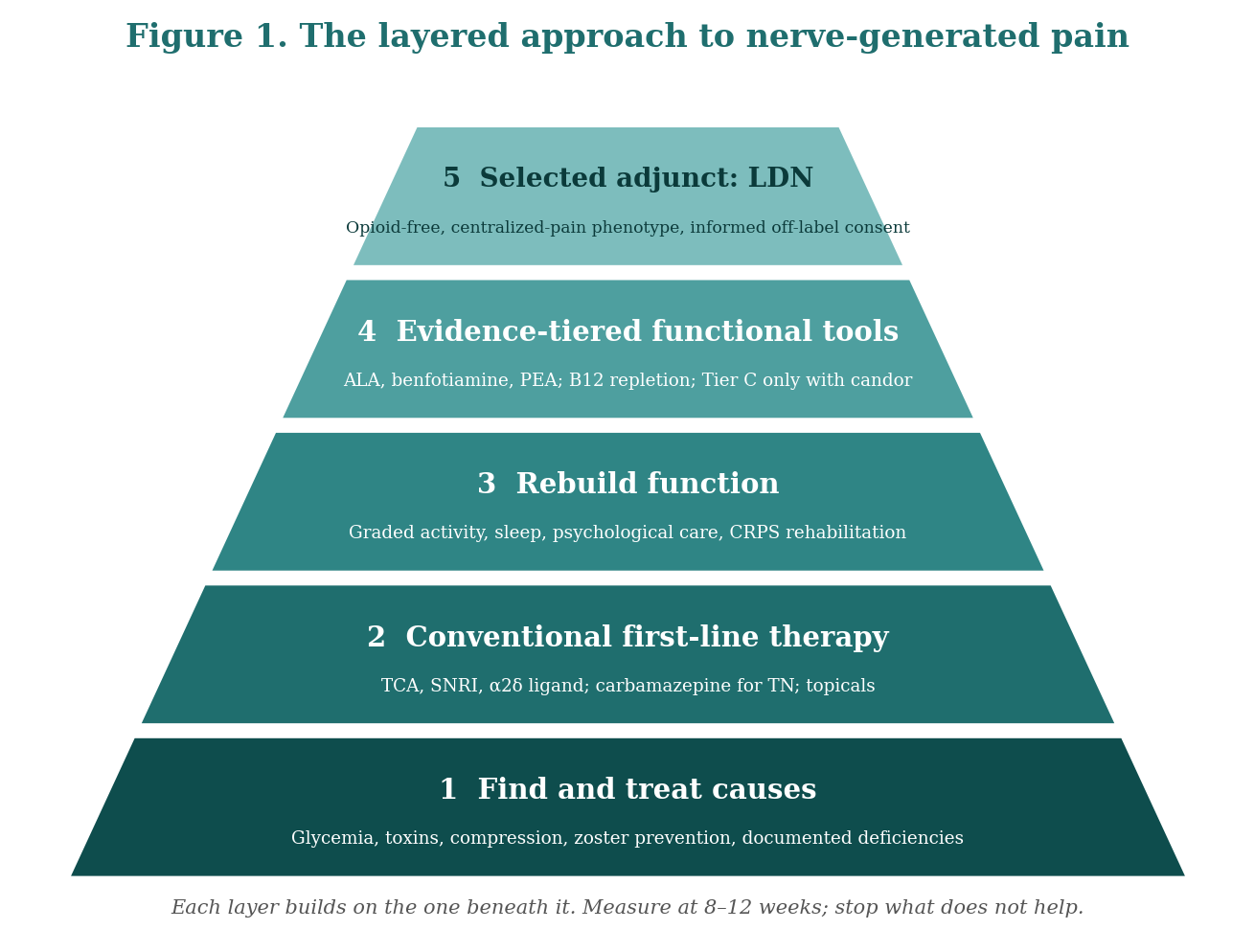
- Define the pain and find causes. Pattern, exam, red flags, and the short lab panel. Refer for atypical features or TN imaging.7,11
- Treat what is treatable. Glycemia, drug and alcohol exposures, compression, zoster prevention, and documented deficiencies.6,9,14
- Start conventional first-line therapy. Tricyclic, SNRI, or α2δ ligand as appropriate, or condition-specific therapy (carbamazepine for TN). Add topicals for localized pain.3,11
- Rebuild function. Graded activity, sleep, psychological support, and in CRPS a multidisciplinary rehabilitation plan.12
- Add evidence-tiered functional tools. One at a time: ALA or benfotiamine in diabetic neuropathy, PEA where a well-tolerated adjunct is wanted, and nothing from Tier C without a frank discussion of the evidence.
- Consider LDN in selected clients. Opioid-free, centralized-pain phenotype, conventional options exhausted or poorly tolerated, informed off-label consent.37,56
- Measure and decide. Average and worst pain, evoked-pain area or threshold, attack frequency for facial pain, sleep, function, and a global rating of change at 8 to 12 weeks. Stop after an adequate tolerated trial without meaningful benefit.
IX. Illustrative Clinical Cases
The three cases below are composites constructed for teaching. They do not describe individual clients, and no outcomes are reported; each ends with how the plan would be reassessed.
Case 1. Burning feet on long-term metformin
Presentation. A 58-year-old man with type 2 diabetes for 12 years, on metformin throughout, reports several months of burning in both feet that is worse at night and has disrupted his sleep.
Workup. Examination shows reduced distal vibration sense and ankle reflexes, with no weakness or asymmetry. HbA1c is above goal. Vitamin B12 is borderline low with an elevated methylmalonic acid, and serum protein electrophoresis is normal.
Synthesis. This is length-dependent diabetic polyneuropathy with probable superimposed B12 deficiency. Diabetic neuropathy is a diagnosis of exclusion, so the B12 result matters6,13,14.
Plan. Replete B12, tighten glycemic control, and start a first-line drug chosen for his comorbidities. If pain remains at 8 to 12 weeks, consider a trial of alpha-lipoic acid, with modest expectations23. If a tricyclic is not tolerated, LDN is a defensible option based on the one randomized trial, provided he takes no opioids37.
Reassessment. Average and worst pain, sleep, and walking tolerance at 8 to 12 weeks, changing one thing at a time.
Case 2. Spreading pain after a wrist fracture
Presentation. A 34-year-old woman, 14 months after a wrist fracture, has burning pain, allodynia, swelling, temperature and color asymmetry, and stiffness that has spread up the forearm. She takes no opioids.
Synthesis. She meets Budapest criteria for CRPS, which are applied clinically, and current guidance puts restoration of function at the center of care12.
Plan. Function-focused rehabilitation with physical and occupational therapy and psychological support comes first, with specialist input on medications. Because standard adjuncts have been inadequate, LDN can be offered as an off-label adjunct with an honest consent discussion: published evidence is three case reports and retrospective subgroup data, and placebo-controlled trials are not yet reported40,42,46.
Reassessment. Area of allodynia, range of motion, grip or hand function, and sleep at baseline and at 8 to 12 weeks. Stop if there is no meaningful benefit after an adequate, tolerated trial.
Case 3. Persistent pain after shingles
Presentation. A 71-year-old woman has had burning, allodynic pain in a thoracic dermatomal band for eight months after herpes zoster. There are no red flags.
Plan. Established options come first: a gabapentinoid with renal dosing, topical lidocaine, and capsaicin if needed8,17. Correct any documented deficiency. When she asks about LDN, the honest answer is that no persuasive human study exists for PHN, and an FDA orphan designation is not evidence of efficacy50. A documented off-label trial is reasonable only after established options have failed or been poorly tolerated, and she must be opioid-free. Family members who are eligible should hear about zoster vaccination9.
Teaching point. This case illustrates the evidence gap: a biologically plausible use with essentially no direct clinical support.
X. Limitations and Future Directions
Most of the LDN literature is retrospective or uncontrolled, involves small samples, and often includes concurrent treatments, so benefit cannot be attributed to LDN alone. The best controlled LDN study used an active comparator without a placebo arm37. The functional tools carry their own limitations: short trials, industry-linked authors in some carnitine analyses28, and cases such as acetyl-L-carnitine where reassuring early data were contradicted in another population29. The field needs larger placebo-controlled trials over clinically relevant timeframes, which is also the conclusion of the most recent guideline update3. Trials that test combinations, define responder phenotypes, and compare sequencing strategies would be especially valuable.
Research priorities follow directly from these gaps:
- Placebo-controlled LDN trials in painful diabetic neuropathy, CRPS, trigeminal neuropathic pain, and PHN, with pre-specified outcomes and adequate duration.
- Head-to-head comparisons of LDN with established first-line drugs, and trials of LDN as an add-on.
- Longer trials of oral alpha-lipoic acid, and randomized trials of palmitoylethanolamide with careful adverse-event reporting.
- Studies that define responder phenotypes and biomarkers, and trials that compare sequencing strategies for nutritional and pharmacologic agents.
Access and equity. LDN is typically compounded and used off-label, so availability, cost, and insurance coverage vary widely, and many of the functional agents are paid for out of pocket. Clinicians should raise cost early in the conversation.
XI. Conclusion
Nerve pain asks us to hold two things at once. The first is discipline: a short, evidence-based workup, guideline-based first-line drugs, condition-specific rules, and function-focused rehabilitation. The second is openness: a stepwise, honestly labeled use of nutritional and functional tools and, in selected clients, a carefully monitored trial of low-dose naltrexone. The clients who do best, in my experience, are the ones whose clinicians can say clearly what is proven, what is promising, and what is still only hope.
Important: This chapter is for educational purposes only and is not medical advice. Doses are reported as studied in the cited literature and are not recommendations for individual patients. LDN and the supplements discussed are used off-label or outside of approved indications for these conditions. Treatment decisions should be made with the patient’s own clinicians.
Appendix A. Quick-Reference Questions and Answers
What is the minimum laboratory evaluation before calling neuropathy idiopathic?
Glucose status (fasting glucose or HbA1c, with a glucose tolerance test if glucose is normal), vitamin B12 with methylmalonic acid, serum protein electrophoresis with immunofixation, a CBC, and a comprehensive metabolic panel. Atypical features such as asymmetry, motor predominance, or rapid onset should prompt neurology referral rather than more tests.7,13
A client takes an opioid and wants to start LDN. What now?
Do not combine them. Naltrexone is contraindicated with opioid analgesics, methadone, and buprenorphine and can precipitate withdrawal. The labeling calls for an opioid-free interval of at least 7 to 10 days after short-acting opioids and longer after long-acting agents. Coordinate any opioid change with the prescribing clinician.56,57
Is alpha-lipoic acid better given orally or intravenously?
The clearer symptom benefit in diabetic neuropathy is with intravenous dosing over about three weeks. Oral benefit is smaller and of uncertain clinical significance, and long-term data are limited, although a four-year oral trial showed better neuropathic impairment scores.23,24
A client on taxane chemotherapy asks about supplements for neuropathy. What do I say?
Avoid acetyl-L-carnitine: in a large randomized trial it did not help and was associated with more neuropathy at 24 weeks, and worse symptoms were noted at two years. Coordinate any other supplement, including antioxidants, with the oncology team.29,30
Appendix B. Glossary
Glossary
References
Numbered in order of first citation.
1. Dworkin RH, O’Connor AB, Audette J, et al. Recommendations for the pharmacological management of neuropathic pain: an overview and literature update. Mayo Clinic Proceedings. 2010;85(3 Suppl):S3-S14. doi:10.4065/mcp.2009.0649. PMID: 20194146. [link]
2. Finnerup NB, Kuner R, Jensen TS. Neuropathic pain: from mechanisms to treatment. Physiological Reviews. 2021;101(1):259-301. doi:10.1152/physrev.00045.2019. PMID: 32584191. [link]
3. Soliman N, Moisset X, Ferraro MC, et al. Pharmacotherapy and non-invasive neuromodulation for neuropathic pain: a systematic review and meta-analysis. Lancet Neurology. 2025;24(5):413-428. doi:10.1016/S1474-4422(25)00068-7. PMID: 40252663. [link]
4. Hutchinson MR, Zhang Y, Brown K, et al. Non-stereoselective reversal of neuropathic pain by naloxone and naltrexone: involvement of Toll-like receptor 4. European Journal of Neuroscience. 2008;28(1):20-29. doi:10.1111/j.1460-9568.2008.06321.x.
5. Younger J, Parkitny L, McLain D. The use of low-dose naltrexone as a novel anti-inflammatory treatment for chronic pain. Clinical Rheumatology. 2014;33(4):451-459. doi:10.1007/s10067-014-2517-2.
6. Pop-Busui R, Boulton AJM, Feldman EL, et al. Diabetic neuropathy: a position statement by the American Diabetes Association. Diabetes Care. 2017;40(1):136-154. doi:10.2337/dc16-2042. PMID: 27999003. [link]
7. Callaghan BC, Price RS, Feldman EL. Distal symmetric polyneuropathy: a review. JAMA. 2015;314(20):2172-2181. doi:10.1001/jama.2015.13611. PMID: 26599185. [link]
8. Johnson RW, Rice ASC. Postherpetic neuralgia. New England Journal of Medicine. 2014;371:1526-1533.
9. Lal H, Cunningham AL, Godeaux O, et al. Efficacy of an adjuvanted herpes zoster subunit vaccine in older adults. New England Journal of Medicine. 2015;372(22):2087-2096. doi:10.1056/NEJMoa1501184. PMID: 25916341. [link]
10. Cruccu G, Finnerup NB, Jensen TS, et al. Trigeminal neuralgia: new classification and diagnostic grading for practice and research. Neurology. 2016;87(2):220-228.
11. Bendtsen L, Zakrzewska JM, Abbott J, et al. European Academy of Neurology guideline on trigeminal neuralgia. European Journal of Neurology. 2019;26(6):831-849. doi:10.1111/ene.13950. PMID: 30860637. [link]
12. Harden RN, McCabe CS, Goebel A, et al. Complex regional pain syndrome: practical diagnostic and treatment guidelines, 5th edition. Pain Medicine. 2022;23(Suppl 1):S1-S53. doi:10.1093/pm/pnac046. [link]
13. England JD, Gronseth GS, Franklin G, et al. Practice parameter: evaluation of distal symmetric polyneuropathy: role of laboratory and genetic testing (an evidence-based review). Neurology. 2009;72(2):185-192. [link]
14. Aroda VR, Edelstein SL, Goldberg RB, et al. Long-term metformin use and vitamin B12 deficiency in the Diabetes Prevention Program Outcomes Study. Journal of Clinical Endocrinology & Metabolism. 2016;101(4):1754-1761. doi:10.1210/jc.2015-3754. PMID: 26900641. [link]
15. England JD, Gronseth GS, Franklin G, et al. Practice parameter: evaluation of distal symmetric polyneuropathy: role of autonomic testing, nerve biopsy, and skin biopsy (an evidence-based review). Neurology. 2009;72(2):177-184.
16. Finnerup NB, Attal N, Haroutounian S, et al. Pharmacotherapy for neuropathic pain in adults: a systematic review and meta-analysis. Lancet Neurology. 2015;14(2):162-173. doi:10.1016/S1474-4422(14)70251-0. PMID: 25575710. [link]
17. Nalamachu S, Morley-Forster P. Diagnosing and managing postherpetic neuralgia. Drugs & Aging. 2012;29(11):863-869.
18. Gronseth G, Cruccu G, Alksne J, et al. Practice parameter: the diagnostic evaluation and treatment of trigeminal neuralgia (an evidence-based review). Neurology. 2008;71(15):1183-1190.
19. Bendtsen L, Zakrzewska JM, Abbott J, et al. Trigeminal neuralgia: a practical guide. Practical Neurology. 2021;21:392-402. [link]
20. Ziegler D, Ametov A, Barinov A, et al. Oral treatment with α-lipoic acid improves symptomatic diabetic polyneuropathy: the SYDNEY 2 trial. Diabetes Care. 2006;29(11):2365-2370.
21. Ziegler D, Nowak H, Kempler P, Vargha P, Low PA. Treatment of symptomatic diabetic polyneuropathy with the antioxidant α-lipoic acid: a meta-analysis. Diabetic Medicine. 2004;21(2):114-121.
22. Mijnhout GS, Kollen BJ, Alkhalaf A, Kleefstra N, Bilo HJG. Alpha lipoic acid for symptomatic peripheral neuropathy in patients with diabetes: a meta-analysis of randomized controlled trials. International Journal of Endocrinology. 2012;2012:456279. doi:10.1155/2012/456279. PMID: 22331979. [link]
23. Ziegler D, Low PA, Litchy WJ, et al. Efficacy and safety of antioxidant treatment with α-lipoic acid over 4 years in diabetic polyneuropathy: the NATHAN 1 trial. Diabetes Care. 2011;34(9):2054-2060. doi:10.2337/dc11-0503. PMID: 21775755. [link]
24. Bartkoski S, Day M. Alpha-lipoic acid for treatment of diabetic peripheral neuropathy. American Family Physician. 2016;93(9):786. [link]
25. Han T, Bai J, Liu W, Hu Y. A systematic review and meta-analysis of α-lipoic acid in the treatment of diabetic peripheral neuropathy. European Journal of Endocrinology. 2012;167(4):465-471.
26. Stracke H, Gaus W, Achenbach U, Federlin K, Bretzel RG. Benfotiamine in diabetic polyneuropathy (BENDIP): results of a randomised, double blind, placebo-controlled clinical study. Experimental and Clinical Endocrinology & Diabetes. 2008;116(10):600-605. doi:10.1055/s-2008-1065351. PMID: 18473286. [link]
27. Haupt E, Ledermann H, Köpcke W. Benfotiamine in the treatment of diabetic polyneuropathy: a three-week randomized, controlled pilot study (BEDIP study). International Journal of Clinical Pharmacology and Therapeutics. 2005;43(2):71-77. PMID: 15726875.
28. Sima AAF, Calvani M, Mehra M, Amato A; Acetyl-L-Carnitine Study Group. Acetyl-L-carnitine improves pain, nerve regeneration, and vibratory perception in patients with chronic diabetic neuropathy: an analysis of two randomized placebo-controlled trials. Diabetes Care. 2005;28(1):89-94. PMID: 15616239.
29. Hershman DL, Unger JM, Crew KD, et al. Randomized double-blind placebo-controlled trial of acetyl-L-carnitine for the prevention of taxane-induced neuropathy in women undergoing adjuvant breast cancer therapy. Journal of Clinical Oncology. 2013;31(20):2627-2633. doi:10.1200/JCO.2012.44.8738. PMID: 23733756. [link]
30. Hershman DL, Unger JM, Crew KD, et al. Two-year trends of taxane-induced neuropathy in women enrolled in a randomized trial of acetyl-L-carnitine (SWOG S0715). Journal of the National Cancer Institute. 2018;110:669-676.
31. Paladini A, Fusco M, Cenacchi T, Schievano C, Piroli A, Varrassi G. Palmitoylethanolamide, a special food for medical purposes, in the treatment of chronic pain: a pooled data meta-analysis. Pain Physician. 2016;19(2):11-24. PMID: 26815246. [link]
32. Artukoglu BB, et al. Efficacy of palmitoylethanolamide for pain: a meta-analysis. Pain Physician. 2017;20(5):353-362.
33. Memorial Sloan Kettering Cancer Center. Polydox (PolyMVA): purported benefits, side effects and more. About Herbs, Botanicals & Other Products. Accessed September 2026. [link]
34. ClinicalTrials.gov. Open label study: treatment of ALS fatigue with PolyMVA. Identifier NCT04557410. [link]
35. ClinicalTrials.gov. Dose evaluation safety study in individuals with astrocytoma taking PolyMVA. Identifier NCT01833273. [link]
36. Toljan K, Vrooman B. Low-dose naltrexone (LDN): review of therapeutic utilization. Medical Sciences. 2018;6(4):82. doi:10.3390/medsci6040082.
37. Srinivasan A, Dutta P, Bansal D, Chakrabarti A, Bhansali AK, Hota D. Efficacy and safety of low-dose naltrexone in painful diabetic neuropathy: a randomized, double-blind, active-control, crossover clinical trial. Journal of Diabetes. 2021;13(10):770-778. doi:10.1111/1753-0407.13202. PMID: 34014028. [link]
38. ClinicalTrials.gov. Low-dose naltrexone for the treatment of painful diabetic neuropathy. Identifier NCT04678895. Randomized, double-blind, placebo-controlled crossover design. [link]
39. Corser-Jensen CE, et al. Retrospective analysis of naltrexone for persistent neuropathic pain: case series. Pain Medicine Case Reports. 2023;7:377-383.
40. McKenzie-Brown AM, Boorman DW, Ibanez KR, Agwu E, Singh V. Low-dose naltrexone (LDN) for chronic pain at a single institution: a case series. Journal of Pain Research. 2023;16:1993-1998. doi:10.2147/JPR.S389957. [link]
41. Dieckmann G, Ozmen MC, Cox SM, Engert RC, Hamrah P. Low-dose naltrexone is effective and well-tolerated for modulating symptoms in patients with neuropathic corneal pain. The Ocular Surface. 2021;20:33-38. doi:10.1016/j.jtos.2020.12.003.
42. Chopra P, Cooper MS. Treatment of complex regional pain syndrome (CRPS) using low dose naltrexone (LDN). Journal of Neuroimmune Pharmacology. 2013;8(3):470-476. doi:10.1007/s11481-013-9451-y. [link]
43. Soin A. Management of pediatric complex regional pain syndrome with low-dose naltrexone. Pain Medicine Case Reports. 2021;5:109-113.
44. Soin A, et al. Low-dose naltrexone use for patients with chronic regional pain syndrome: a systematic literature review. Pain Physician. 2021;24:E125-E143. PMID: 34213865. [link]
45. ClinicalTrials.gov. Low-dose naltrexone for the treatment of complex regional pain syndrome. Identifier NCT02502162. Stanford; randomized LDN versus placebo. [link]
46. ClinicalTrials.gov. Low dose naltrexone therapy for complex regional pain syndrome. Identifier NCT06306157. Hospital for Special Surgery feasibility study of LDN plus standard care versus placebo plus standard care. [link]
47. de Oliveira CL, Medeiros LF, de Souza VS, et al. Low-dose naltrexone reverses facial mechanical allodynia in a rat model of trigeminal neuralgia. Neuroscience Letters. 2020;736:135248. doi:10.1016/j.neulet.2020.135248.
48. Naderi Y, Soti M, Soltani M, et al. Co-administration of low-dose naltrexone and carbamazepine remarkably ameliorates allodynia and cognitive deficit in a rat model of trigeminal neuralgia. Scientific Reports. 2025;15:31335. [link]
49. Ananthan S, Heir G, Korczeniewska O. Use of low-dose naltrexone in the management of posttraumatic trigeminal neuropathic pain: a retrospective case series. Quintessence International. 2025;56(8):682-690. doi:10.3290/j.qi.b6335903. PMID: 40590142. [link]
50. FDA Orphan Drug Designations. Naltrexone for post-herpetic neuralgia: orphan designation only; not FDA approval for PHN treatment.[link]
51. Kim PS, Fishman MA. Low-dose naltrexone for chronic pain: update and systematic review. Current Pain and Headache Reports. 2020;24:64.
52. Rupp A, Young E, Chadwick AL. Low-dose naltrexone’s utility for non-cancer centralized pain conditions: a scoping review. Pain Medicine. 2023;24(11):1270-1281.
53. Low-dose naltrexone: what is the evidence? A narrative review. 2026. [link]
54. Kim YH. Low-dose naltrexone: mechanisms, individualized dosing, and clinical applications in integrative medicine. IFM Synergy. 2026. [link]
55. Kim YH. Low-dose naltrexone in complex regional pain syndrome: mechanisms, clinical evidence, and individualized dosing. IFM Synergy. 2026. [link]
56. DailyMed. Naltrexone hydrochloride tablets: prescribing information, contraindications, opioid-free interval, hepatic precautions, and opioid-overdose risk.[link]
57. Substance Abuse and Mental Health Services Administration. Naltrexone: treatment information and opioid-withdrawal/overdose precautions.[link]
Related Reading
Companion articles on IFM Synergy and related sources:
- Low-Dose Naltrexone: Mechanisms, Individualized Dosing, and Clinical Applications in Integrative Medicine
- Low-Dose Naltrexone in Complex Regional Pain Syndrome: Mechanisms, Clinical Evidence, and Individualized Dosing
- LDN Research Trust: Efficacy and Safety of Low-Dose Naltrexone in Painful Diabetic Neuropathy (summary)
About the Author
Yoon Hang Kim, MD, MPH, is board-certified in Preventive Medicine and an integrative and functional medicine physician with more than 20 years of experience. He completed the University of Arizona fellowship under Dr. Andrew Weil and holds UCLA medical acupuncture certification. His clinical focus includes LDN, autoimmune conditions, chronic pain, integrative oncology, fibromyalgia, chronic fatigue, MCAS, and mold toxicity. He is the author of 8 books, including MCAS: Epidemic in Plain Sight and LDN Primer, both available on Amazon, and more than 25 peer-reviewed articles, and he founded the LDN Support Group. Professional: www.yoonhangkim.com | Clinical: www.directintegrativecare.com


